
How to Build Organizing Skills in Kids (Without Power Struggles)
When kids understand where things belong and why, it becomes much easier for them to stay organized. Those early wins build confidence and help develop skills they’ll likely use for the rest of their lives.
But in many families, organizing can start to feel like a power struggle. Reminders pile up, frustration builds, and everyone ends up feeling defeated.
It doesn’t have to be that way. Organizing skills can be taught in ways that feel supportive instead of stressful; the key is designing systems kids can actually use and grow into.
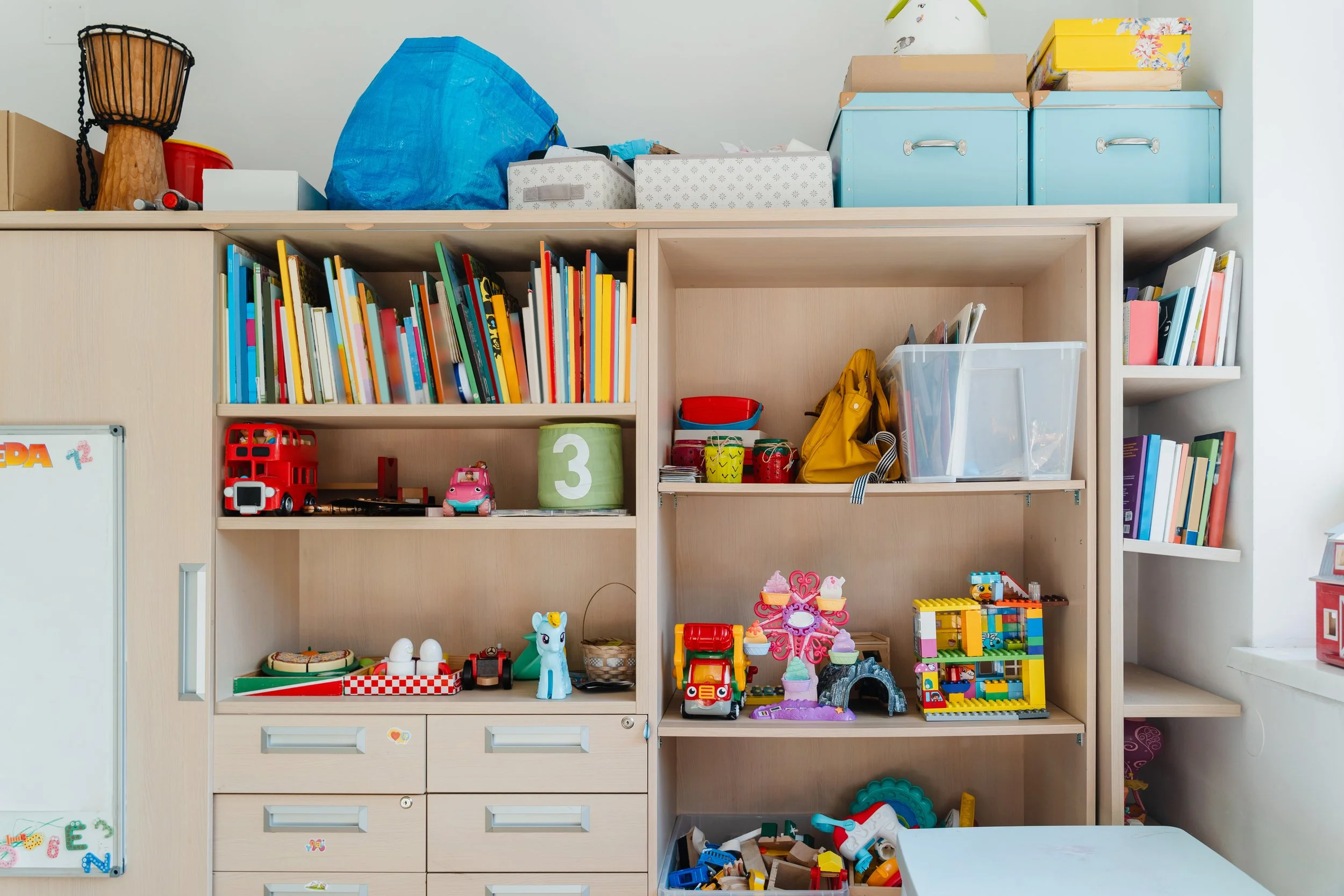
Focus on Skills, Not Outcomes
Kids don’t need perfectly organized rooms. They need practice managing their things.
When the goal is “clean”, organizing often becomes about compliance. When the goal is skill-building, it becomes about learning.
Skills kids develop through organizing include:
Categorizing
Decision-making
Following simple routines
Taking responsibility for their belongings
Progress matters more than perfection.
Design Systems That Match Their Abilities
One of the most common reasons organizing turns into a struggle is that systems are designed for adults, not kids.
Ask yourself:
Can my child reach this?
Can they understand where things go?
Can they reset the space without help?
Systems that work well for kids often include:
Open bins instead of drawers
Broad categories instead of detailed sorting
Visual labels or pictures
Storage placed at kid height
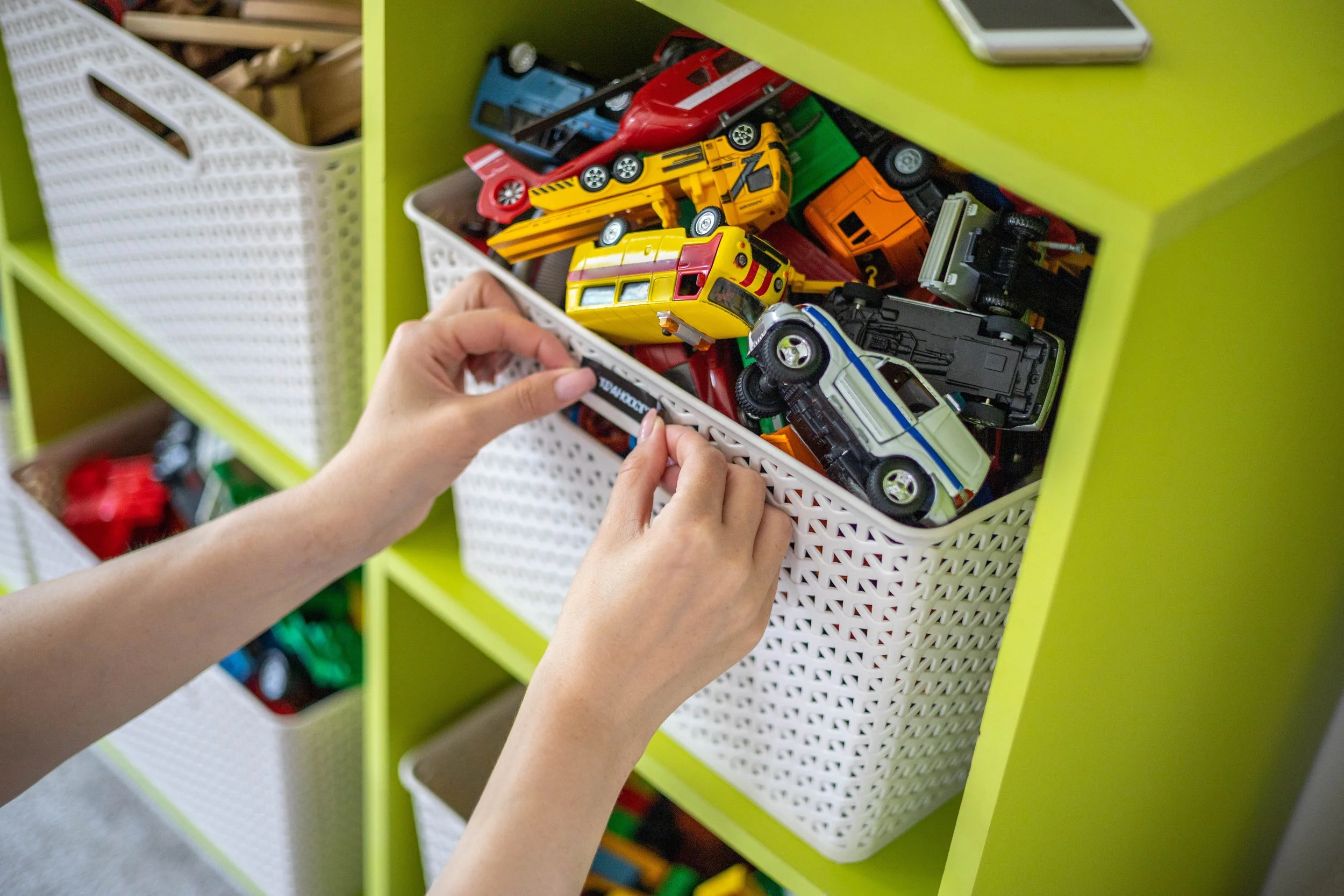
When systems are intuitive, kids are more likely to use them independently.
Use Routines Instead of Reminders
Constant reminders create friction. Routines create consistency.
Attaching organizing to existing habits makes it feel more natural:
Putting shoes away when they come inside
Resetting toys at the end of playtime
Laying the next day’s clothes out before bed
Over time, these routines become automatic, reducing the need for reminders and conflict.
Let Kids Make Decisions (Within Limits)
Organizing is a learned skill, and learning requires choice. Giving kids age-appropriate control helps build buy-in:
Let them choose which toys stay out
Involve them in deciding categories
Allow them to edit items as they outgrow them
Boundaries are still important, but shared decision-making reduces resistance.
Keep Expectations Realistic
Kids’ organizing abilities will grow over time and often at their own pace.
What works for a preschooler won’t work for a middle schooler, and systems will need to evolve as kids grow. That’s normal.
Aim for systems that:
Are easy to reset
Foster independence
Allow for some mess
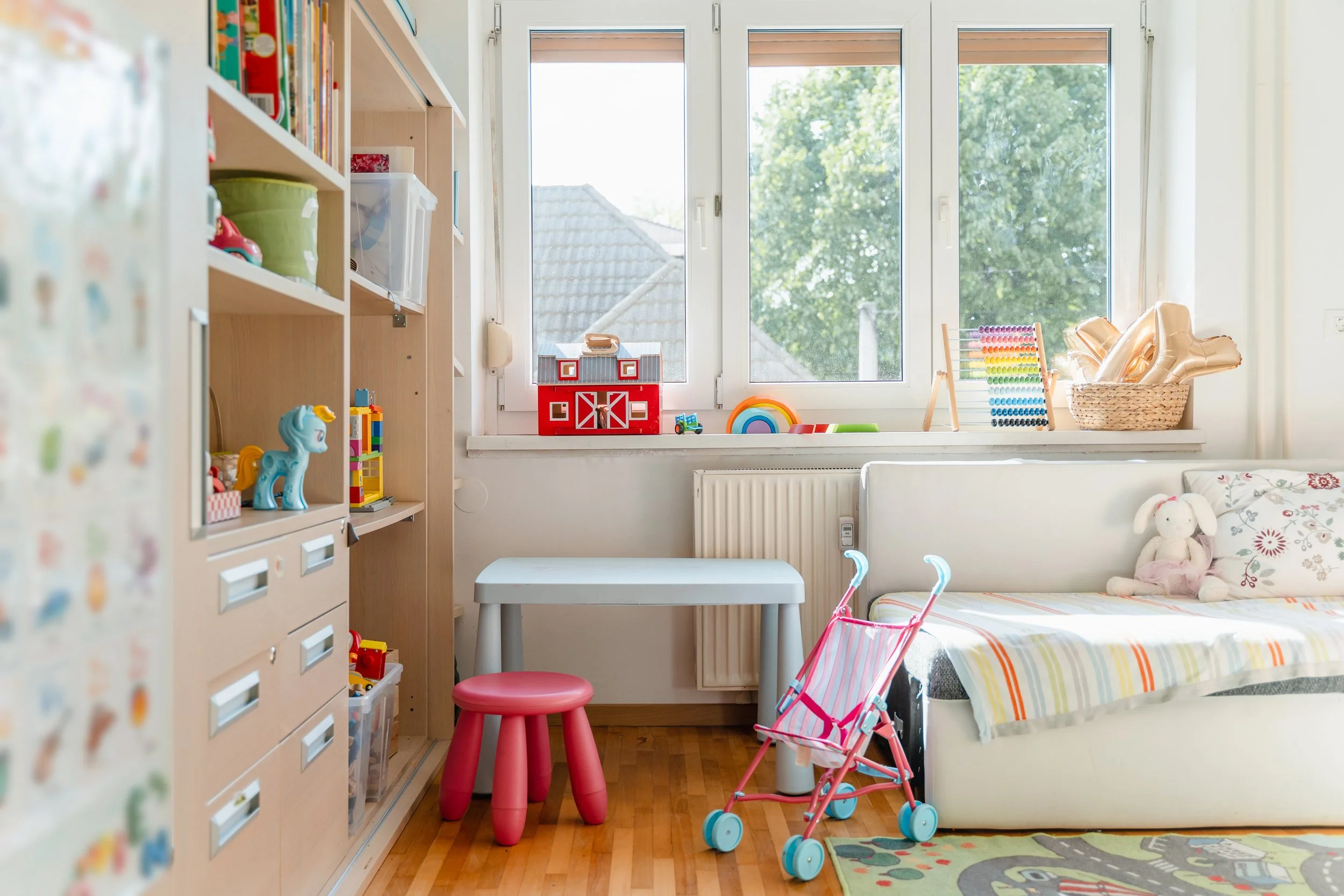
Organizing doesn’t have to look perfect to be effective.
Normalize Maintenance and Adjustments
Systems will stop working occasionally. That doesn’t mean kids failed or that the system was wrong.
Use these moments as opportunities to adjust:
Are there too many items for the space?
Is the system too complicated?
Has your child’s routine changed?
Small tweaks keep systems supportive and prevent organizing from becoming a source of tension.
Celebrate Progress, Not Perfection
Recognizing effort matters.
Instead of focusing on what didn’t get done, notice what did:
Toys returned to bins
Shoes put away without prompting
A quicker reset than last time
Positive reinforcement builds confidence and motivation.
When You Want Extra Support
Every family is different, and there’s no one-size-fits-all approach to teaching organizing skills.
As a professional organizing company, we help families design kid-friendly systems that grow with their children. Our goal is to reduce power struggles and create spaces that support independence and ease.